Two interesting blog posts drew my attention the last couple of days. Firstly from the Guardian's Poverty Matter blog is an article on the need for a new set of MDGs that apply to all countries. I couldn't agree more with the view that, "The MDGs development targets (MDGs 1-7) apply only to "developing countries", leaving the entirely false implication that "developed countries" no longer have anything to improve on. Next time we draw up some global targets, all countries should be treated the same, all with targets to meet at home, and all with a responsibility to offer help and solidarity abroad."
ATD Fourth World has long argued the same point and is in the process of drawing up a project that will give people living in the most extreme poverty in "developing countries" the chance to have their say on the impact the Goals have had on their lives to date. The project will also include people living in long-term poverty in Europe and North America their opportunity to have a say on what poverty eradication targets have meant to them (the EU for example set a target in 2000 to make a decisive impact on poverty). The project also aims to enable people living in poverty to point the way forward so that the successor to the MDGs post-2015 has more success in reaching those experiencing the severest poverty.
Whilst working on this project proposal today, I came across a blog post that publicised a Village in Action Conference that seeks to build a platform for villages to be heard in order to,"Contribute not only our voices to the discussion, but to also showcase what we are already doing to advance our own communities." The first Conference will take place in Uganda on 27 November. This initiative came about due to frustration that debate on the MDGs, particularly during the September summit, is devoid of the voice of those who stand lost to gain from them.
I look forward to reading what the people from this Ugandan village have to say about what they are doing to achieve the MDGs. Between now and 2015, we will need plenty more initiatives that do not see people in poverty as mere "beneficiaries" but actors of change whose knowledge cannot go untapped if we want to make that decisive impact on extreme poverty in all countries in the world.

Photo: Gizmodo
Tuesday, November 9, 2010


Wednesday, October 27, 2010
Small acts of resistance
I came across today on Duncan Green's blog what seems like a really inspiring book called "Small acts of resistance: How courage, tenacity and ingenuity can change the world." The book has its own website where you can also submit your own stories of resistance.
Some of the examples included on the website from the book give pinpoint examples of how ordinary citizens took very simple actions to bring about change. For example, football supporters in Uruguay during the military dictatorship mumbled the national anthem until it came to the line, "May tyrants tremble!" which they shouted with all their might, before continuing to mumble the rest. The Generals couldn't arrest a whole football stadium nor could they accept the humiliation of removing this line from the national anthem. The people had found a way to express their opinion.
Those of us committed to creating a fairer world by eradicating poverty should also submit our stories of acts of resistance. So often we're faced with the question, "So what have you done that's improved people's lives?" Often our responses are so long-winded and complex, that potential supporters have moved on to the next, more readily understandable cause.
We should take up the author's invitation to submit our small acts of resistance. We are witness to them everyday by people living extraordinarily difficult lives who, despite all the odds, demonstrate courage, tenacity and ingenuity to survive extreme poverty. To inspire you, here's a video presentation of the book.
Small Acts of Resistance Final from Small Acts on Vimeo.
Some of the examples included on the website from the book give pinpoint examples of how ordinary citizens took very simple actions to bring about change. For example, football supporters in Uruguay during the military dictatorship mumbled the national anthem until it came to the line, "May tyrants tremble!" which they shouted with all their might, before continuing to mumble the rest. The Generals couldn't arrest a whole football stadium nor could they accept the humiliation of removing this line from the national anthem. The people had found a way to express their opinion.
Those of us committed to creating a fairer world by eradicating poverty should also submit our stories of acts of resistance. So often we're faced with the question, "So what have you done that's improved people's lives?" Often our responses are so long-winded and complex, that potential supporters have moved on to the next, more readily understandable cause.
We should take up the author's invitation to submit our small acts of resistance. We are witness to them everyday by people living extraordinarily difficult lives who, despite all the odds, demonstrate courage, tenacity and ingenuity to survive extreme poverty. To inspire you, here's a video presentation of the book.
Small Acts of Resistance Final from Small Acts on Vimeo.
Saturday, October 23, 2010
A world where money is more important than people
I was in Strasbourg this week, accompanying a group of young people from across Europe to meet Ban Ki-moon, the UN Secretary General. Some of the guys who made up the delegation continue to have a difficult life, struggling to find work or their place on a worthwhile training course. And struggling to find their place in a society that tends to value people's worth in economic more often than human terms. Others have had more opportunities but are committed to creating a society which gives those same chances to everyone whatever their background.
It was uplifting to join them as they delivered their Appeal for a fairer world to Ban Ki-moon and the European Parliament President. This Appeal is the fruit of a process that has brought European young people together over the past year, in which each person was listened to and each point of view was respected. The Appeal asks Europeans of all ages and backgrounds to express their solidarity with young people who are among the over 80 million who live in poverty across the continent.
"As young people from across Europe and in solidarity with young people the world over, we live in a world where money is more important than people. This world excludes some of us and breaks others. It leaves us feeling disgusted and angry. (…) We are of all ages and from across Europe. We dream of a fairer world. We must come together to make it possible."
The high that the young people were on after the event was infectious. As one of them put it, "When we began the process of writing this Appeal, I could never have imagined that we would end up reading it to the UN Secretary-General!"
It is easy to be cynical about such encounters between dignitaries and "ordinary citizens". I honesty got the feeling that Ban Ki-moon was genuinely touched and impressed by the commitment of this group of young people. In his very spontaneous response, he congratulated them on their leadership in tackling questions of poverty and encouraged their expression of solidarity to build a world free from poverty.
Those of us accompanying the delegation must now ensure that the Appeal's strong message of a dream for a fairer world is reinforced by reminding world leaders and decision makers of the expectations young people have for them to stand by the commitments they have made to make that dream a reality.
European youth appeal to the UN Secretary-General for a fairer world from ATDFRA on Vimeo.
It was uplifting to join them as they delivered their Appeal for a fairer world to Ban Ki-moon and the European Parliament President. This Appeal is the fruit of a process that has brought European young people together over the past year, in which each person was listened to and each point of view was respected. The Appeal asks Europeans of all ages and backgrounds to express their solidarity with young people who are among the over 80 million who live in poverty across the continent.
"As young people from across Europe and in solidarity with young people the world over, we live in a world where money is more important than people. This world excludes some of us and breaks others. It leaves us feeling disgusted and angry. (…) We are of all ages and from across Europe. We dream of a fairer world. We must come together to make it possible."
The high that the young people were on after the event was infectious. As one of them put it, "When we began the process of writing this Appeal, I could never have imagined that we would end up reading it to the UN Secretary-General!"
It is easy to be cynical about such encounters between dignitaries and "ordinary citizens". I honesty got the feeling that Ban Ki-moon was genuinely touched and impressed by the commitment of this group of young people. In his very spontaneous response, he congratulated them on their leadership in tackling questions of poverty and encouraged their expression of solidarity to build a world free from poverty.
Those of us accompanying the delegation must now ensure that the Appeal's strong message of a dream for a fairer world is reinforced by reminding world leaders and decision makers of the expectations young people have for them to stand by the commitments they have made to make that dream a reality.
European youth appeal to the UN Secretary-General for a fairer world from ATDFRA on Vimeo.
Saturday, October 16, 2010
Break the silence: International Day for the Eradication of Poverty
Tomorrow is the International Day for the Eradication of Poverty. I'll be heading to the Plaza of Liberties and Human Rights, at the Trocadero in Paris to join thousands of others to who share my refusal to accept that over a billion of our fellow citizens be condemned to a life of extreme poverty. The Plaza were over 60 years ago the Universal Declaration of Human Rights was signed to herald, "Freedom from fear and want has been proclaimed as the highest aspiration of the common people."
What will it take to spur us to take a stand against the injustice of poverty and make this proclamation more than rhetoric? For President Piñera of Chile, it was the plight of the 33 miners which led him to state his country will could now undertake the challenge to be the first in Latin America to defeat poverty.
It shouldn't need 33 courageous men to spur us to end poverty. The rallying call has come from many great figures in history over the years. From Victor Hugo, who in addressing the French Parliament in 1849 said, "I am among those who think and affirm that poverty can be destroyed." Or more recently, Nelson Mandela, who, now free, reminded us that the poor are not: "They are trapped in the prison of poverty. It is time to set them free."
Yet since the onset of the global economic crisis, nearly 70 million more people have been condemned to extreme poverty. And this just ten years after the international community pledged to, "Spare no effort to free our fellow men, women and children from the abject and dehumanizing conditions of extreme poverty."
Poverty can and must be eradicated. Tomorrow, people in different corners of the globe, including those who experience poverty first-hand, will express the conviction of Joseph Wresinski that, "Wherever men and women are condemned to live in extreme poverty, human rights are violated. To come together to ensure that these rights be respected is our solemn duty."
Below is a video from the director general of ATD Fourth World with his meesage for the International Day for the Eradication of Poverty.
What will you be doing tomorrow?
Message from Eugen Brand, Director General of the International Movement ATD Fourth World on the occasion of the International D from ATDFRA on Vimeo.
What will it take to spur us to take a stand against the injustice of poverty and make this proclamation more than rhetoric? For President Piñera of Chile, it was the plight of the 33 miners which led him to state his country will could now undertake the challenge to be the first in Latin America to defeat poverty.
It shouldn't need 33 courageous men to spur us to end poverty. The rallying call has come from many great figures in history over the years. From Victor Hugo, who in addressing the French Parliament in 1849 said, "I am among those who think and affirm that poverty can be destroyed." Or more recently, Nelson Mandela, who, now free, reminded us that the poor are not: "They are trapped in the prison of poverty. It is time to set them free."
Yet since the onset of the global economic crisis, nearly 70 million more people have been condemned to extreme poverty. And this just ten years after the international community pledged to, "Spare no effort to free our fellow men, women and children from the abject and dehumanizing conditions of extreme poverty."
Poverty can and must be eradicated. Tomorrow, people in different corners of the globe, including those who experience poverty first-hand, will express the conviction of Joseph Wresinski that, "Wherever men and women are condemned to live in extreme poverty, human rights are violated. To come together to ensure that these rights be respected is our solemn duty."
Below is a video from the director general of ATD Fourth World with his meesage for the International Day for the Eradication of Poverty.
What will you be doing tomorrow?
Message from Eugen Brand, Director General of the International Movement ATD Fourth World on the occasion of the International D from ATDFRA on Vimeo.
Sunday, September 26, 2010
Gross national happiness
As world leaders come away from the UN in New York following this week's MDG summit and opening of the General Assembly, is anything likely to change for the people whose lives the MDGs are intended to improve? Let's be honest, given that the community of nations pledged 10 years ago to, "spare no effort to free our fellow men, women and children from the abject and dehumanizing conditions of extreme poverty," they were hardly likely to shrug their shoulders and back away from such promises. But are we any closer now to delivery on these promises?
What positives can we take away from the summit to reassure people across the world whose lives have gone unchanged, or become more difficult, since 2000? Aside the usual rhetoric of "must do better", there were some departures from the standard script. Presidents Sarkozy and Zapatero spoke passionately about the need to introduce a tax on international financial transactions to fund progress towards the MDGs. But with the continued lukewarm response from the US in particular, this is unlikely to see the light of day any time soon. The Swiss government's representative focussed on the need for a human rights approach to achieving the MDGs, a tool woefully absent from the framework to date. And there is finally some mention in the summit's outcome document of the need to respect, protect and promote human rights in order to reach the Goals. But no mention of how this will be fulfuilled.
My highlight though was the speech from the Prime Minister of Bhutan. He called on the voluntary adoption of a ninth MDG: happiness. Bhutan has long rejected mainstream development paradigms, opting to meaure its country's progress not by improvements in Gross National Product, but Growth National Happiness. Interestingly, the Bhutanese rightly point out that the MDG framework does nothing to tackle poverty and inequality in the developed world. Goals towards achieving happiness, they point out, would be equally relevant and valuable for the global north.
Below you can view the Bhutan Prime Minister's address. This concept is not to be dismissed out of hand. The wonders of economic growth, even before the crisis, have been unable to eradicate poverty and achieve full enjoyment of all human rights for all. Despite the laughter in the General Assembly from some quarters that accompanied Bhutan's idea, there is surely something to gain from taking a closer look at Gross National Happiness.
What positives can we take away from the summit to reassure people across the world whose lives have gone unchanged, or become more difficult, since 2000? Aside the usual rhetoric of "must do better", there were some departures from the standard script. Presidents Sarkozy and Zapatero spoke passionately about the need to introduce a tax on international financial transactions to fund progress towards the MDGs. But with the continued lukewarm response from the US in particular, this is unlikely to see the light of day any time soon. The Swiss government's representative focussed on the need for a human rights approach to achieving the MDGs, a tool woefully absent from the framework to date. And there is finally some mention in the summit's outcome document of the need to respect, protect and promote human rights in order to reach the Goals. But no mention of how this will be fulfuilled.
My highlight though was the speech from the Prime Minister of Bhutan. He called on the voluntary adoption of a ninth MDG: happiness. Bhutan has long rejected mainstream development paradigms, opting to meaure its country's progress not by improvements in Gross National Product, but Growth National Happiness. Interestingly, the Bhutanese rightly point out that the MDG framework does nothing to tackle poverty and inequality in the developed world. Goals towards achieving happiness, they point out, would be equally relevant and valuable for the global north.
Below you can view the Bhutan Prime Minister's address. This concept is not to be dismissed out of hand. The wonders of economic growth, even before the crisis, have been unable to eradicate poverty and achieve full enjoyment of all human rights for all. Despite the laughter in the General Assembly from some quarters that accompanied Bhutan's idea, there is surely something to gain from taking a closer look at Gross National Happiness.
Sunday, September 5, 2010
The science of motivation
Just came across a great post on the Owen Abroad blog. It's a presentation by the economist Dan Pink about the science of "motivation".
Two interesting things emerge for me. Firstly in the NGO sector, we should traditionally be solely driven by purpose rather than financial reward. Rather than salaries being high enough that people don't need to worry about the money and thus perform better, they can also be low enough (especially in the case of volunteers) that financial again is completely removed from the equation. But what happens in the new era of NGOs where CEOs are paid $150,000 and upwards? And even if there's no danger of a profit motive becoming detached from a purpose motive, does financial reward in the NGO sector introduce other dangers?
Secondly, what can this science tell us about policy-making that is driven by a carrot and stick reward system. "Conditionality" is a major driver of social welfare in both the global north (receipt of welfare being attached to a commitment by the beneficiary to seek work for example) and south (entitlement to conditional cash transfers dependent on children being in full-time education).
From this study, should policy-makers' use of motivation to get the best outcomes (for beneficiaries and taxpayers) also be challenged?
Two interesting things emerge for me. Firstly in the NGO sector, we should traditionally be solely driven by purpose rather than financial reward. Rather than salaries being high enough that people don't need to worry about the money and thus perform better, they can also be low enough (especially in the case of volunteers) that financial again is completely removed from the equation. But what happens in the new era of NGOs where CEOs are paid $150,000 and upwards? And even if there's no danger of a profit motive becoming detached from a purpose motive, does financial reward in the NGO sector introduce other dangers?
Secondly, what can this science tell us about policy-making that is driven by a carrot and stick reward system. "Conditionality" is a major driver of social welfare in both the global north (receipt of welfare being attached to a commitment by the beneficiary to seek work for example) and south (entitlement to conditional cash transfers dependent on children being in full-time education).
From this study, should policy-makers' use of motivation to get the best outcomes (for beneficiaries and taxpayers) also be challenged?
Sunday, August 29, 2010
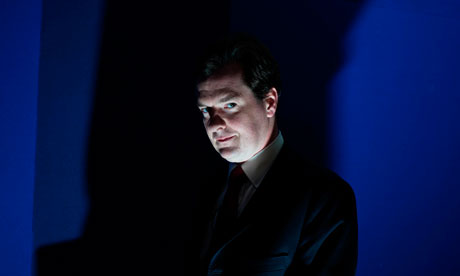
Revealed: the face of Tory Britain
 |
| Photo: Rex Features |
A newly cast "Dracula"? A villain in a forthcoming Bond film?
No, it's George Osborne, one of the faces of the new "compassionate conservatism" and the UK's Chancellor of the Exchequer (equivalent to Finance Minister).
A recent Guardian newspaper article ran this photo with a story on an analysis of the UK Government's austerity measures carried out by the Institute for Fiscal Studies, a well respected and independent non-profit research institution. They have shown that despite the Con-Dem coalition's best claims of fairness, the welfare cuts mean working families on the lowest incomes – particularly those with children – are the biggest losers. This amounts to the poorest 10% of families losing over 5% of their income as a result of the budget compared with a loss of less than 1% for non-pensioner households without children in the richest 10% of households.
No one with any sense doubted for a second Tory promises to be the new "champions of the poor." What is galling, for fools such as myself who voted for the Libdems in May, is Nick Clegg and co's propping up of Tory policy that would have had Margaret Thatcher twirling her handbag in joy.
Subscribe to:
Posts (Atom)