I was in Strasbourg this week, accompanying a group of young people from across Europe to meet Ban Ki-moon, the UN Secretary General. Some of the guys who made up the delegation continue to have a difficult life, struggling to find work or their place on a worthwhile training course. And struggling to find their place in a society that tends to value people's worth in economic more often than human terms. Others have had more opportunities but are committed to creating a society which gives those same chances to everyone whatever their background.
It was uplifting to join them as they delivered their Appeal for a fairer world to Ban Ki-moon and the European Parliament President. This Appeal is the fruit of a process that has brought European young people together over the past year, in which each person was listened to and each point of view was respected. The Appeal asks Europeans of all ages and backgrounds to express their solidarity with young people who are among the over 80 million who live in poverty across the continent.
"As young people from across Europe and in solidarity with young people the world over, we live in a world where money is more important than people. This world excludes some of us and breaks others. It leaves us feeling disgusted and angry. (…) We are of all ages and from across Europe. We dream of a fairer world. We must come together to make it possible."
The high that the young people were on after the event was infectious. As one of them put it, "When we began the process of writing this Appeal, I could never have imagined that we would end up reading it to the UN Secretary-General!"
It is easy to be cynical about such encounters between dignitaries and "ordinary citizens". I honesty got the feeling that Ban Ki-moon was genuinely touched and impressed by the commitment of this group of young people. In his very spontaneous response, he congratulated them on their leadership in tackling questions of poverty and encouraged their expression of solidarity to build a world free from poverty.
Those of us accompanying the delegation must now ensure that the Appeal's strong message of a dream for a fairer world is reinforced by reminding world leaders and decision makers of the expectations young people have for them to stand by the commitments they have made to make that dream a reality.
European youth appeal to the UN Secretary-General for a fairer world from ATDFRA on Vimeo.

Photo: Gizmodo
Saturday, October 23, 2010


Saturday, October 16, 2010
Break the silence: International Day for the Eradication of Poverty
Tomorrow is the International Day for the Eradication of Poverty. I'll be heading to the Plaza of Liberties and Human Rights, at the Trocadero in Paris to join thousands of others to who share my refusal to accept that over a billion of our fellow citizens be condemned to a life of extreme poverty. The Plaza were over 60 years ago the Universal Declaration of Human Rights was signed to herald, "Freedom from fear and want has been proclaimed as the highest aspiration of the common people."
What will it take to spur us to take a stand against the injustice of poverty and make this proclamation more than rhetoric? For President Piñera of Chile, it was the plight of the 33 miners which led him to state his country will could now undertake the challenge to be the first in Latin America to defeat poverty.
It shouldn't need 33 courageous men to spur us to end poverty. The rallying call has come from many great figures in history over the years. From Victor Hugo, who in addressing the French Parliament in 1849 said, "I am among those who think and affirm that poverty can be destroyed." Or more recently, Nelson Mandela, who, now free, reminded us that the poor are not: "They are trapped in the prison of poverty. It is time to set them free."
Yet since the onset of the global economic crisis, nearly 70 million more people have been condemned to extreme poverty. And this just ten years after the international community pledged to, "Spare no effort to free our fellow men, women and children from the abject and dehumanizing conditions of extreme poverty."
Poverty can and must be eradicated. Tomorrow, people in different corners of the globe, including those who experience poverty first-hand, will express the conviction of Joseph Wresinski that, "Wherever men and women are condemned to live in extreme poverty, human rights are violated. To come together to ensure that these rights be respected is our solemn duty."
Below is a video from the director general of ATD Fourth World with his meesage for the International Day for the Eradication of Poverty.
What will you be doing tomorrow?
Message from Eugen Brand, Director General of the International Movement ATD Fourth World on the occasion of the International D from ATDFRA on Vimeo.
What will it take to spur us to take a stand against the injustice of poverty and make this proclamation more than rhetoric? For President Piñera of Chile, it was the plight of the 33 miners which led him to state his country will could now undertake the challenge to be the first in Latin America to defeat poverty.
It shouldn't need 33 courageous men to spur us to end poverty. The rallying call has come from many great figures in history over the years. From Victor Hugo, who in addressing the French Parliament in 1849 said, "I am among those who think and affirm that poverty can be destroyed." Or more recently, Nelson Mandela, who, now free, reminded us that the poor are not: "They are trapped in the prison of poverty. It is time to set them free."
Yet since the onset of the global economic crisis, nearly 70 million more people have been condemned to extreme poverty. And this just ten years after the international community pledged to, "Spare no effort to free our fellow men, women and children from the abject and dehumanizing conditions of extreme poverty."
Poverty can and must be eradicated. Tomorrow, people in different corners of the globe, including those who experience poverty first-hand, will express the conviction of Joseph Wresinski that, "Wherever men and women are condemned to live in extreme poverty, human rights are violated. To come together to ensure that these rights be respected is our solemn duty."
Below is a video from the director general of ATD Fourth World with his meesage for the International Day for the Eradication of Poverty.
What will you be doing tomorrow?
Message from Eugen Brand, Director General of the International Movement ATD Fourth World on the occasion of the International D from ATDFRA on Vimeo.
Sunday, September 26, 2010
Gross national happiness
As world leaders come away from the UN in New York following this week's MDG summit and opening of the General Assembly, is anything likely to change for the people whose lives the MDGs are intended to improve? Let's be honest, given that the community of nations pledged 10 years ago to, "spare no effort to free our fellow men, women and children from the abject and dehumanizing conditions of extreme poverty," they were hardly likely to shrug their shoulders and back away from such promises. But are we any closer now to delivery on these promises?
What positives can we take away from the summit to reassure people across the world whose lives have gone unchanged, or become more difficult, since 2000? Aside the usual rhetoric of "must do better", there were some departures from the standard script. Presidents Sarkozy and Zapatero spoke passionately about the need to introduce a tax on international financial transactions to fund progress towards the MDGs. But with the continued lukewarm response from the US in particular, this is unlikely to see the light of day any time soon. The Swiss government's representative focussed on the need for a human rights approach to achieving the MDGs, a tool woefully absent from the framework to date. And there is finally some mention in the summit's outcome document of the need to respect, protect and promote human rights in order to reach the Goals. But no mention of how this will be fulfuilled.
My highlight though was the speech from the Prime Minister of Bhutan. He called on the voluntary adoption of a ninth MDG: happiness. Bhutan has long rejected mainstream development paradigms, opting to meaure its country's progress not by improvements in Gross National Product, but Growth National Happiness. Interestingly, the Bhutanese rightly point out that the MDG framework does nothing to tackle poverty and inequality in the developed world. Goals towards achieving happiness, they point out, would be equally relevant and valuable for the global north.
Below you can view the Bhutan Prime Minister's address. This concept is not to be dismissed out of hand. The wonders of economic growth, even before the crisis, have been unable to eradicate poverty and achieve full enjoyment of all human rights for all. Despite the laughter in the General Assembly from some quarters that accompanied Bhutan's idea, there is surely something to gain from taking a closer look at Gross National Happiness.
What positives can we take away from the summit to reassure people across the world whose lives have gone unchanged, or become more difficult, since 2000? Aside the usual rhetoric of "must do better", there were some departures from the standard script. Presidents Sarkozy and Zapatero spoke passionately about the need to introduce a tax on international financial transactions to fund progress towards the MDGs. But with the continued lukewarm response from the US in particular, this is unlikely to see the light of day any time soon. The Swiss government's representative focussed on the need for a human rights approach to achieving the MDGs, a tool woefully absent from the framework to date. And there is finally some mention in the summit's outcome document of the need to respect, protect and promote human rights in order to reach the Goals. But no mention of how this will be fulfuilled.
My highlight though was the speech from the Prime Minister of Bhutan. He called on the voluntary adoption of a ninth MDG: happiness. Bhutan has long rejected mainstream development paradigms, opting to meaure its country's progress not by improvements in Gross National Product, but Growth National Happiness. Interestingly, the Bhutanese rightly point out that the MDG framework does nothing to tackle poverty and inequality in the developed world. Goals towards achieving happiness, they point out, would be equally relevant and valuable for the global north.
Below you can view the Bhutan Prime Minister's address. This concept is not to be dismissed out of hand. The wonders of economic growth, even before the crisis, have been unable to eradicate poverty and achieve full enjoyment of all human rights for all. Despite the laughter in the General Assembly from some quarters that accompanied Bhutan's idea, there is surely something to gain from taking a closer look at Gross National Happiness.
Sunday, September 5, 2010
The science of motivation
Just came across a great post on the Owen Abroad blog. It's a presentation by the economist Dan Pink about the science of "motivation".
Two interesting things emerge for me. Firstly in the NGO sector, we should traditionally be solely driven by purpose rather than financial reward. Rather than salaries being high enough that people don't need to worry about the money and thus perform better, they can also be low enough (especially in the case of volunteers) that financial again is completely removed from the equation. But what happens in the new era of NGOs where CEOs are paid $150,000 and upwards? And even if there's no danger of a profit motive becoming detached from a purpose motive, does financial reward in the NGO sector introduce other dangers?
Secondly, what can this science tell us about policy-making that is driven by a carrot and stick reward system. "Conditionality" is a major driver of social welfare in both the global north (receipt of welfare being attached to a commitment by the beneficiary to seek work for example) and south (entitlement to conditional cash transfers dependent on children being in full-time education).
From this study, should policy-makers' use of motivation to get the best outcomes (for beneficiaries and taxpayers) also be challenged?
Two interesting things emerge for me. Firstly in the NGO sector, we should traditionally be solely driven by purpose rather than financial reward. Rather than salaries being high enough that people don't need to worry about the money and thus perform better, they can also be low enough (especially in the case of volunteers) that financial again is completely removed from the equation. But what happens in the new era of NGOs where CEOs are paid $150,000 and upwards? And even if there's no danger of a profit motive becoming detached from a purpose motive, does financial reward in the NGO sector introduce other dangers?
Secondly, what can this science tell us about policy-making that is driven by a carrot and stick reward system. "Conditionality" is a major driver of social welfare in both the global north (receipt of welfare being attached to a commitment by the beneficiary to seek work for example) and south (entitlement to conditional cash transfers dependent on children being in full-time education).
From this study, should policy-makers' use of motivation to get the best outcomes (for beneficiaries and taxpayers) also be challenged?
Sunday, August 29, 2010
Revealed: the face of Tory Britain
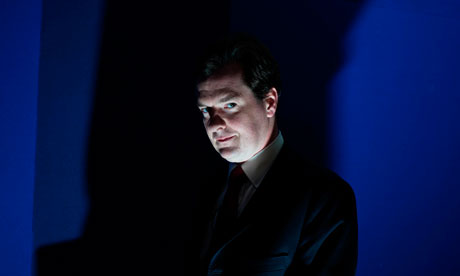 |
| Photo: Rex Features |
A newly cast "Dracula"? A villain in a forthcoming Bond film?
No, it's George Osborne, one of the faces of the new "compassionate conservatism" and the UK's Chancellor of the Exchequer (equivalent to Finance Minister).
A recent Guardian newspaper article ran this photo with a story on an analysis of the UK Government's austerity measures carried out by the Institute for Fiscal Studies, a well respected and independent non-profit research institution. They have shown that despite the Con-Dem coalition's best claims of fairness, the welfare cuts mean working families on the lowest incomes – particularly those with children – are the biggest losers. This amounts to the poorest 10% of families losing over 5% of their income as a result of the budget compared with a loss of less than 1% for non-pensioner households without children in the richest 10% of households.
No one with any sense doubted for a second Tory promises to be the new "champions of the poor." What is galling, for fools such as myself who voted for the Libdems in May, is Nick Clegg and co's propping up of Tory policy that would have had Margaret Thatcher twirling her handbag in joy.
Wednesday, August 25, 2010
Dragons who risk fanning the flames
Just stumbled across this video of James Caan in Pakistan (those in the UK will know him as one of the "Dragons" from the TV show Dragon's Den, a show in which entrepreneurs invite people with business propositions to make a pitch and then decide whether to invest their money).
I'm willing to stand corrected, but the news report gives the impression that he's flown into his native Pakistan with a fistful of pounds to sort the food distribution problem single-handed.
"The food ends up going to the fittest," he insightfully reveals at the end. What did he expect when roaring into the flood hit areas with a lorry full of supplies? That he would automatically be able to identify and reach those most in need?
Why is that so many individuals in these situations believe they can do better than Governments or aid agencies who have years of experience is such complex logistical operations?
I'm willing to stand corrected, but the news report gives the impression that he's flown into his native Pakistan with a fistful of pounds to sort the food distribution problem single-handed.
"The food ends up going to the fittest," he insightfully reveals at the end. What did he expect when roaring into the flood hit areas with a lorry full of supplies? That he would automatically be able to identify and reach those most in need?
Why is that so many individuals in these situations believe they can do better than Governments or aid agencies who have years of experience is such complex logistical operations?
Sunday, August 22, 2010
Tales of the unexpected
I'm in that post-holiday limbo, when the children are yet to go back to school and I delude myself that I will be able to catch up with work and the kids will look after themselves. Working from home does have its advantages though, such as having the radio on in the background without having to worry about whether it will bother anyone.
This morning's Radio 4 background came into the foreground as I listened with increasing interest to Kathy Burke's choice of Desert Island Discs. She spoke about her challenging childhood, brought up on a council estate in north London, mother dying when she was 2, father with drink problem... all the ingredients for future "anti-social behaviour" and "problem families", justifications that were so often thown up by New Labour for the next wave of draconian initiatives.
Except Kathy Burke went on to become an acclaimed actress, winning a best actor award at Cannes. Which begs the question, what is it that leads to some people overcoming childhood disadvantage in adulthood (not necessarily measured by how many film awards you win) whilst others continue to experience as adults poverty and social exclusion?
Many studies have focused on identifying factors which enable resilience and thus either prevent families falling into extreme poverty or from children experiencing the same outcome as adults as their parents. One study, with the snazzy title of Tales of the Unexpected, conducted by social policy and public health experts in the UK, defined resilience as "the process of achieving positive and unexpected outcomes in adverse conditions."
Unfortunately, public policy generally has very low expectations of the resilience of families living in pòverty. Yet, in working with such families for 8 years in the UK, I was constantly amazed by the fortitude shown by many parents, especially to keep their children out of the care system.
Such a shame then that the Coalition Government seems to be following the New Labour pattern in side-stepping evidence based policy-making when it suits in favour of gimicky measures to grab tabloid headlines. The latest being the resurfacing of plans to withhold benefits from anyone refusing treatment for drug or alcohol addiction. This despite the social security advisory committee finding back in May that withdrawing benefits from drug users would lead them into crime and prostitution.
Not all kids living on north London council estates can go on to receive an award at Cannes. But surely it pays to raise our expectations of the height children and adults living in poverty are able to reach if we understand and trust in their capacity to achieve the unexpected.
This morning's Radio 4 background came into the foreground as I listened with increasing interest to Kathy Burke's choice of Desert Island Discs. She spoke about her challenging childhood, brought up on a council estate in north London, mother dying when she was 2, father with drink problem... all the ingredients for future "anti-social behaviour" and "problem families", justifications that were so often thown up by New Labour for the next wave of draconian initiatives.
Except Kathy Burke went on to become an acclaimed actress, winning a best actor award at Cannes. Which begs the question, what is it that leads to some people overcoming childhood disadvantage in adulthood (not necessarily measured by how many film awards you win) whilst others continue to experience as adults poverty and social exclusion?
Many studies have focused on identifying factors which enable resilience and thus either prevent families falling into extreme poverty or from children experiencing the same outcome as adults as their parents. One study, with the snazzy title of Tales of the Unexpected, conducted by social policy and public health experts in the UK, defined resilience as "the process of achieving positive and unexpected outcomes in adverse conditions."
Unfortunately, public policy generally has very low expectations of the resilience of families living in pòverty. Yet, in working with such families for 8 years in the UK, I was constantly amazed by the fortitude shown by many parents, especially to keep their children out of the care system.
Such a shame then that the Coalition Government seems to be following the New Labour pattern in side-stepping evidence based policy-making when it suits in favour of gimicky measures to grab tabloid headlines. The latest being the resurfacing of plans to withhold benefits from anyone refusing treatment for drug or alcohol addiction. This despite the social security advisory committee finding back in May that withdrawing benefits from drug users would lead them into crime and prostitution.
Not all kids living on north London council estates can go on to receive an award at Cannes. But surely it pays to raise our expectations of the height children and adults living in poverty are able to reach if we understand and trust in their capacity to achieve the unexpected.
Subscribe to:
Posts (Atom)